

For years, the global sports landscape seemed dominated almost exclusively by football, basketball, tennis, and a handful of other major disciplines. Today, however, the picture is far more dynamic.
The rise of social media, the spread of streaming platforms, the organization of more accessible international circuits, and the support of federations are reshaping the hierarchy: sports that were once considered niche are entering mainstream conversation, attracting players, sponsors, audiences, and media coverage across many countries.
In some cases, the surge in popularity has been so rapid that relatively unknown disciplines have become global phenomena in just a few years.
Padel – From Side Sport to International Phenomenon
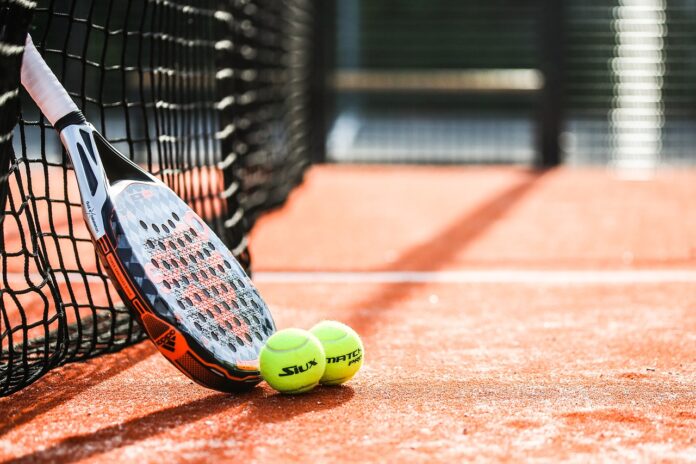
Padel is probably the clearest example of an emerging sport that has now become mainstream. Its strength lies in a simple yet effective formula: quick learning curve, entertaining matches, strong social appeal, and more accessible costs compared to other racket sports. The International Padel Federation has confirmed significant growth, with global participation surpassing 35 million players and over 100 affiliated national federations, clear signs of an increasingly structured and widespread sport.
At a competitive level, growth is not just about the number of enthusiasts but also the depth of the ecosystem. In the first half of 2025 alone, FIP and Premier Padel circuits recorded over 130 tournaments, involving thousands of players from more than 90 countries.
This expansion goes beyond traditional European strongholds, reaching Asia, Africa, and the Americas. When a sport broadens its international base in this way, it stops being a trend and starts becoming a global sports industry.
Pickleball – The Boom Expanding Beyond the United States
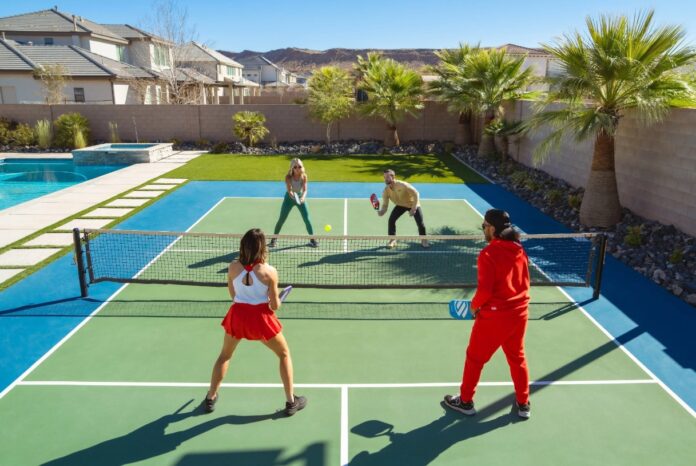
If padel symbolizes growth in Europe and Latin America, pickleball represents one of the most remarkable success stories emerging from North America. Originally conceived as a hybrid between tennis, badminton, and table tennis, it has gained traction thanks to its accessibility, smaller courts, and appeal across all age groups.
In the United States, infrastructure has grown rapidly, with tens of thousands of courts and locations now mapped nationwide, evidence of how quickly the sport has evolved from a casual pastime into an organized system.
What is even more interesting is that pickleball is no longer just an “American” sport. International federations are expanding, and structured ranking systems are being adopted in multiple countries. This means standardized competition, better-organized tournaments, and global comparability of results, key elements for sustained growth.
Around these sports, a more mature informational ecosystem is also developing, including rankings, statistics, and odds published on specialized platforms; for this reason, references may occasionally appear on a betting site, not as a central aspect of the sporting experience, but as an indicator that the discipline has reached a truly international level of visibility.
Flag Football – The Olympic Push That Could Change Everything
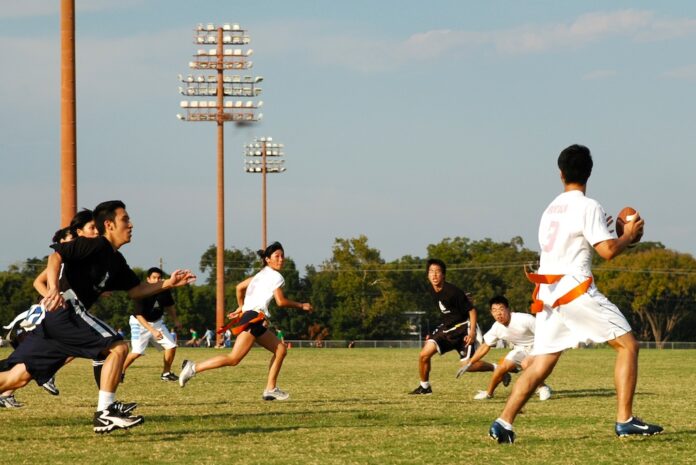
Among the less traditional sports experiencing rapid growth is flag football. This non-contact variation of American football offers a decisive advantage: it preserves the speed, tactics, and excitement of the original game while lowering physical and logistical barriers. Its rise has been cemented by its inclusion in the Los Angeles 2028 Olympic Games, where it will make its official debut.
The Olympic effect is powerful. When a sport enters the Games, it gains international legitimacy, attracts attention from national committees, and sees increased investment in youth development, training, and competitions. For flag football, this comes at the perfect time: the sport is dynamic enough to perform well on television and social media, yet flexible enough to be introduced in schools and urban settings. While not yet a mass sport globally, it has all the characteristics needed to become one.
Teqball – A Simple Idea with Global Appeal
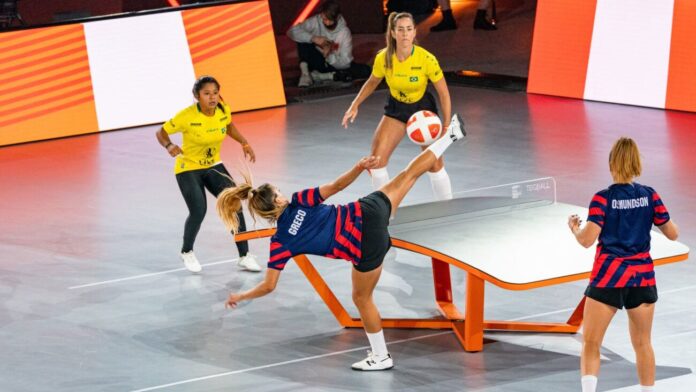
Another discipline worth watching closely is teqball, built around a curved table that transforms ball control into a highly technical and visually engaging sport. Teqball has benefited greatly from its “social-friendly” nature: short, spectacular plays that are easily shared online, combined with a strong connection to football.
However, the sport is no longer just about viral moments. Its inclusion as a medal event in major international competitions marks a significant step forward. This shift demonstrates that teqball is transitioning from an exhibition activity to a sport with a solid institutional framework.
International circuits, regional leagues, and global tournaments are now part of its ecosystem. These structural elements, more than highlight-reel plays, are what determine whether a sport truly has a future.
Roller Derby – A Niche That Keeps Expanding
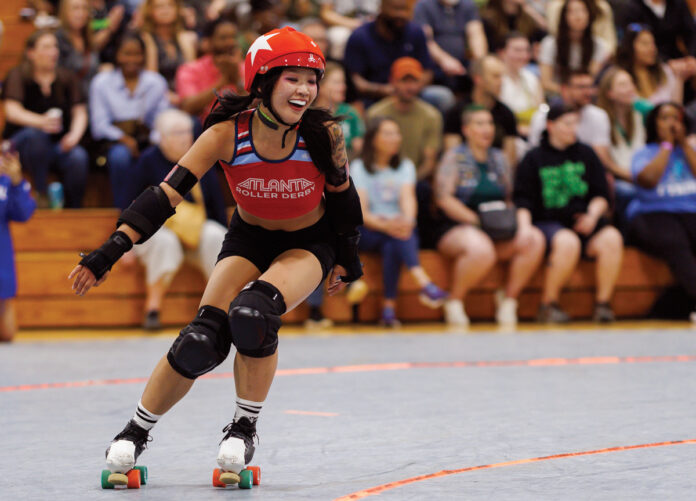
Roller derby remains less well-known than padel, pickleball, or flag football, but it would be a mistake to consider it marginal. Its strength lies elsewhere: it is not purely a commercial phenomenon but a community-driven sport with a strong cultural and inclusive identity.
International governing bodies continue to support its development, and global competitions show that roller derby has long moved beyond its underground origins.
What makes roller derby particularly interesting is its ability to grow without losing its essence. It has preserved its unique identity, strong team dynamics, and significant female representation while gaining increasing institutional recognition. It may never become a mainstream sport in the traditional sense, but it demonstrates how visibility, structure, and identity can elevate a discipline beyond niche status.