
A good product description should feel easy to read, but it should never feel empty. That is where many e-commerce brands slip. They polish the wording, make everything sound premium, and then forget to answer the buyer’s practical questions.
Smooth copy can create interest, but clear details create confidence. In tech and business ecommerce, shoppers want proof, specs, compatibility, limits, and reasons to trust what they are about to buy.
Nice Writing Gets Attention, Details Close the Gap
Smooth product copy helps people understand value quickly. A laptop is not just “16GB RAM, 1TB SSD.”
It is faster work, fewer slowdowns, easier multitasking, and maybe a calmer Monday morning. But the emotional layer only works when the facts underneath are solid.
Nielsen Norman Group explained this clearly in its 2014 article “3 Tips for Better Product Descriptions on Websites,” noting that 20% of task failures in its ecommerce studies were linked to incomplete or unclear product information.
Weak details do not just make copy less impressive. They make shoppers leave, compare elsewhere, or assume the product is not right.
Why Modern Product Copy Needs a Trust Check
The rise of AI writing tools has made smooth copy easier to produce, which is both helpful and risky. A page can sound polished while still being vague, repetitive, or slightly misleading.
That is why teams should review product page content for accuracy, originality, and usefulness before publishing. Tools like an AI text detector can be part of that review process, especially when copy is produced at scale.
Still, no tool replaces human judgment. Someone who understands the product has to check whether the description answers real buying questions.
Does it explain the material, size, included items, and compatibility? In business terms, clear copy lowers friction.
The Problem With “Beautiful but Blank” Descriptions
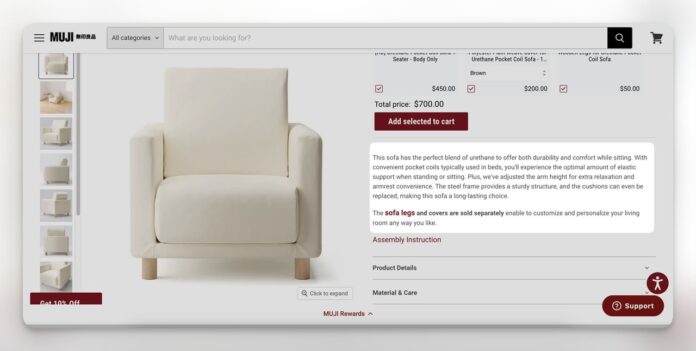
You have probably seen product descriptions that sound elegant but tell you almost nothing. “Designed for modern performance.” “Built for everyday comfort.” “Created with premium quality.”
Those phrases are not wrong, but they are incomplete. They leave the buyer asking, “Okay, but what does that actually mean?”
Baymard Institute reported in 2021 that 10% of the largest ecommerce sites failed to provide a consistently high level of detail in product descriptions. Its research also found that missing information could lead users to abandon a product page or even leave the site.
That is dangerous where another seller offers the same product with clearer dimensions, materials, accessories, or compatibility notes.
What Clear Details Actually Look Like
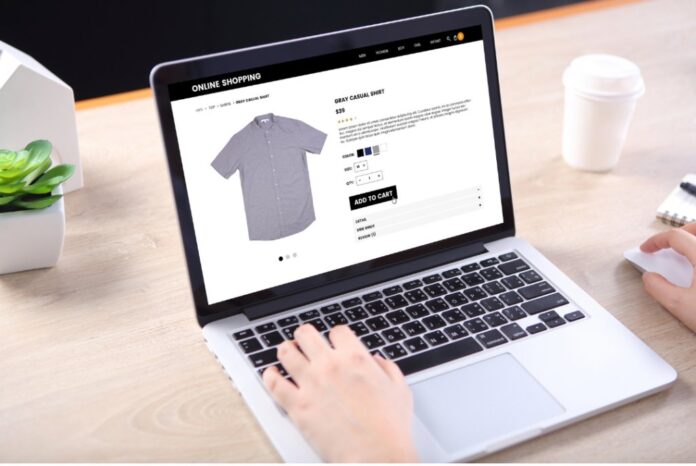
Clear details do not mean dumping every technical line into one exhausting paragraph. The best ecommerce product copy blends benefit-led writing with easy-to-scan facts.
The details that often matter most are:
- size, weight, dimensions, and capacity
- material, finish, ingredients, or components
- compatibility with devices, systems, or accessories
- what is included in the package
- warranty, shipping, returns, and availability
This is where product description SEO becomes more natural. Instead of stuffing keywords, you answer search intent.
A shopper looking for “USB-C docking station for dual monitors” needs compatibility details, not a poetic sentence about productivity.
A Simple Way to Balance Copy and Specs
The easiest structure is to separate persuasion from confirmation. The opening paragraph should explain why the product matters.
Then the next section should confirm the facts that make the promise believable. This keeps the page warm but still useful.
|
Copy element |
What it should do |
Example |
|
Opening line |
Explain the main benefit |
“Work across two screens without clutter.” |
|
Short paragraph |
Add context and use case |
“Ideal for hybrid desks and compact setups.” |
|
Specs area |
Confirm key facts |
“2 HDMI ports, 100W charging, USB-C input.” |
|
Trust detail |
Reduce hesitation |
“Compatible with Windows, macOS, and selected tablets.” |
The table supports the writing. People who skim get facts quickly, while people who read deeper still get a natural explanation.
Why Details Help SEO Without Killing the Tone

Search engines are trying to understand the same thing buyers are: what is this page really about, and is it useful?
Google’s Search Central guidance says its systems aim to reward helpful, reliable, people-first content, not content made mainly to manipulate rankings. For product pages, descriptions should be written for actual shoppers first.
Good details also help Google connect the product to specific searches. A vague page might target “wireless headset,” but a stronger page can naturally include “noise-canceling wireless headset for video calls,” “battery life,” and “USB-C charging.” That is not keyword stuffing. That is useful context.
Important note: clear product details are not decoration. They are decision support. Every missing fact becomes a small reason to hesitate.
Structured Data Still Needs Human-Friendly Copy
Structured data can help product information appear in richer ways across Google Search, including price, availability, ratings, shipping details, and returns.
Google explains this in its Product structured data documentation, last updated on December 10, 2025. But structured data is not a replacement for a strong visible description.
Think of structured data as the label machines can read, while product copy is the explanation people trust. Both should match. If the page says one thing, the feed says another, and the description avoids details, the experience feels messy.
For ecommerce SEO, consistency matters. Product title, copy, specifications, images, schema, and feed data should tell the same story.
The Details That Reduce Returns and Support Questions

Clear product descriptions do not only help before the sale. They can also reduce avoidable problems after the sale.
If a buyer knows the exact size, cable type, included accessories, supported models, care instructions, or installation limits, they are less likely to buy the wrong item.
This matters for tech products, tools, appliances, apparel, and B2B equipment. In these categories, one missing detail can change everything.
A monitor arm may look perfect until the buyer realizes the desk thickness is unsupported. A charger may seem ideal until the wattage is too low. Smooth copy might win the click, but accurate details prevent disappointment.
FAQs
1. Should every product description include technical specifications?
Yes, when specifications affect the buying decision. A simple decorative item may need fewer details than a laptop, tool, or software product, but every page should answer the buyer’s likely questions.
2. Can AI write good product descriptions?
AI can help create drafts, variations, and structure, but product descriptions still need human review. Someone should check facts, tone, brand fit, compliance, and usefulness before publishing.
3. What is the biggest mistake in product description SEO?
The biggest mistake is writing for keywords before writing for buyers. When a page answers real questions, keywords often appear naturally and the copy feels more trustworthy.
Final Thoughts
Smooth copy matters, but it should act like a guide, not a curtain. The best product descriptions make the product sound appealing while also giving shoppers the facts they need to decide. That balance is what builds trust. In a crowded ecommerce market, clear details can be the difference between “looks nice” and “this is exactly what I need.”